A 7-Day Budget Vegan Meal Plan
By The Plated Plants Team · · 4 min readUpdated
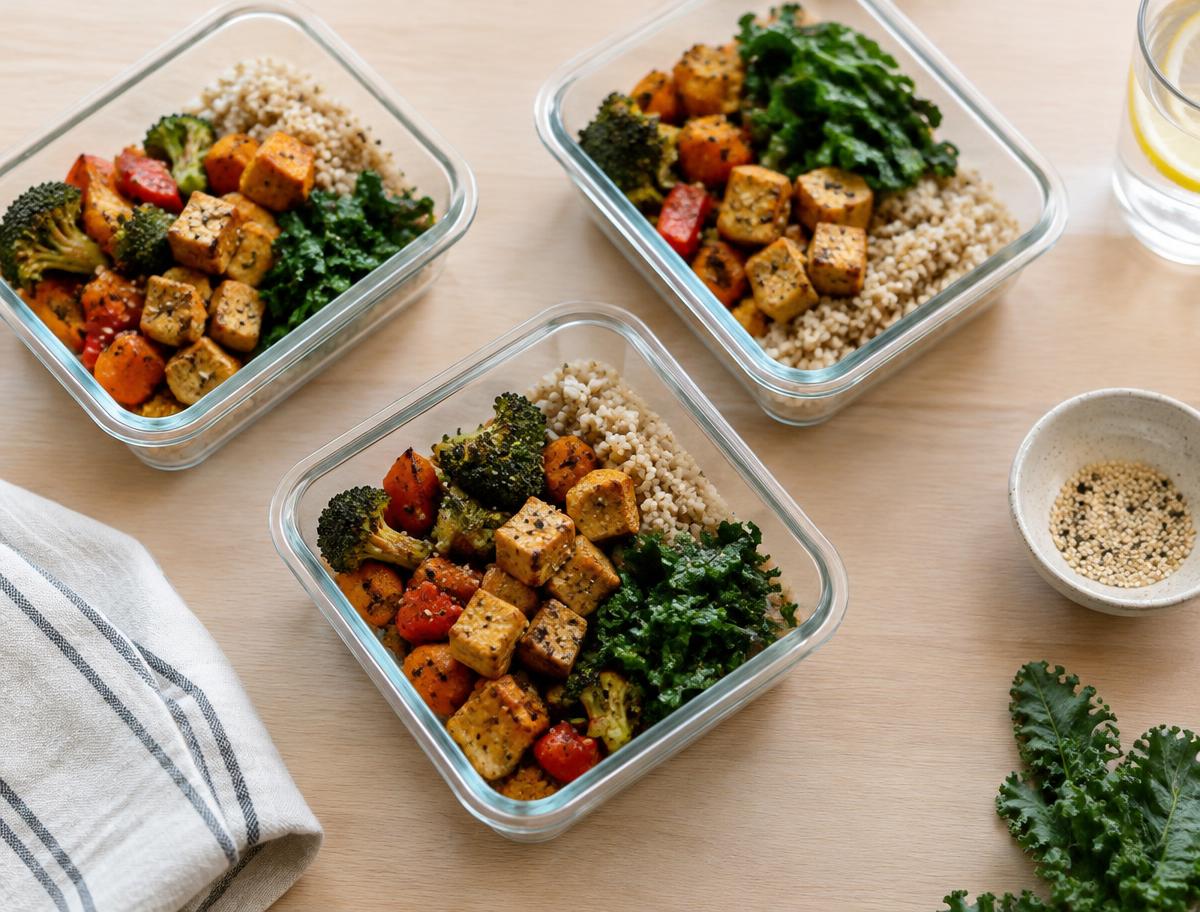
The secret to a budget meal plan isn't cheap ingredients alone — it's reusing the same ingredients across several meals. This plan leans on rice, oats, lentils, chickpeas, frozen vegetables and a handful of fresh produce.
How this plan saves money
- Cook grains and legumes in big batches twice a week
- Use frozen vegetables to reduce waste
- Repeat breakfasts and lunches — vary dinners
- Turn leftovers into the next day's lunch
The week at a glance
- Monday — Overnight oats · Chickpea salad wraps · Chickpea spinach curry
- Tuesday — Overnight oats · Leftover curry with rice · Black bean tacos
- Wednesday — Peanut butter toast & banana · Taco bowl leftovers · Lentil bolognese
- Thursday — Overnight oats · Bolognese pasta salad · Veggie fried rice with tofu
- Friday — Smoothie · Fried rice leftovers · Sweet potato black bean chili
- Saturday — Chickpea pancakes · Chili-loaded potatoes · Peanut noodle bowls
- Sunday — Oats · Clean-out-the-fridge bowls · Red lentil dal
Prep day checklist
- Cook a large pot of rice and a pot of lentils
- Soak or open chickpeas and black beans
- Make three jars of overnight oats
- Chop onions, carrots and peppers for the first three dinners
A note on prices
Grocery prices vary widely by region and store, so we haven't listed a total cost. Store brands, bulk bins and frozen produce usually make the biggest difference.
Build the shopping list around portions, not promises
This sample week is a planning example, not a priced or nutritionally calculated meal plan. Decide how many people you are feeding and how often you will eat at home before choosing quantities. Count the meals that use chickpeas, beans and lentils, then buy enough for those meals instead of filling the cupboard just because a package is on sale.
Check oats, rice, pasta, peanut butter and seasonings first. Add legumes, tofu, frozen vegetables and produce for the meals you selected. Keep one optional dinner flexible so that leftover vegetables or a change in plans do not create waste.
- Dry cupboard: oats, rice, pasta, lentils and seasonings
- Cans or cartons: beans, chickpeas, tomatoes and suitable plant milk
- Fridge: tofu, cabbage, carrots, fruit and any planned greens
- Freezer: vegetables and any portions saved for later
Split prep into two sessions
Do not refrigerate all seven days of cooked rice and legumes on Sunday and expect them to stay suitable for the whole week. Make the first few days of components, then prepare a smaller second batch midweek. Freeze portions intended for later and thaw them safely in the refrigerator when needed.
On the first session, prepare oats, a grain and one legume dish. On the second, refresh the vegetables, cook another base and turn remaining ingredients into chili or a bowl. Refrigerate perishables within two hours, or within one hour above 90°F/32°C. A conservative three-to-four-day plan for many cooked leftovers helps keep the schedule manageable; respect any shorter guidance on the package.
Swap meals without breaking the plan
If peanut noodles do not suit you, keep the tofu and vegetables and use them in a rice bowl with another sauce. If fresh spinach is expensive, use frozen spinach in curry according to its package instructions. If you cannot find tempeh or a specialty yogurt, choose everyday beans, tofu or a fortified plant milk that fits your needs instead.
Repeat the breakfast you actually like rather than buying ingredients for seven different mornings. A good meal plan offers structure without requiring perfect adherence, and a useful swap should reduce work rather than create a second shopping trip.
Check the week for variety and nutrition
A list of cheap meals does not automatically meet everyone’s needs. Include vegetables and fruit across the week, and plan a reliable B12 source. Plant milks and yogurts vary in fortification; check for nutrients such as calcium and B12 on the label instead of assuming all alternatives are equivalent.
Adjust portions to your appetite and seek qualified nutrition advice for individual needs, pregnancy, children or medical conditions. This plan is a starting point for shopping and cooking, not a substitute for personalized guidance.
You might also like
How to Eat Vegan on a Budget
A practical guide to affordable vegan meals: compare grocery prices, use beans and frozen vegetables, plan leftovers and waste less food.
· 7 min read
Vegan Grocery List for Beginners
A calm, practical shopping list to stock a plant-based kitchen without overspending.
· 3 min read
The Ultimate Vegan Pantry Staples List for Beginners
Stock a vegan pantry without overspending: a beginner staples checklist, easy meal combinations, storage tips and ingredients worth skipping.
· 7 min read
Newsletter
Fresh Ideas, Straight to Your Inbox
Get new recipes, simple meal plans, and practical plant-based tips delivered to your inbox.